Ditch, canal, rip current: what it is and how to identify it
Knowing how to identify a ditch can save you a lot of energy to spend at the right time. Do you know how to identify one?
22/Mai/2022 - Lidiane JorãoDitch, channel, rip current, undertow current, spring, lagoon... and where do you find it? Mora, do you have another name? All of these names serve to designate that current that every surfer likes, as it is the same current. It is precisely this that facilitates entry into the sea, making you swim. get to the outside more easily and taking fewer waves on your head.
[TAKE THE SURFGURU WAVE FORECASTING COURSE ]
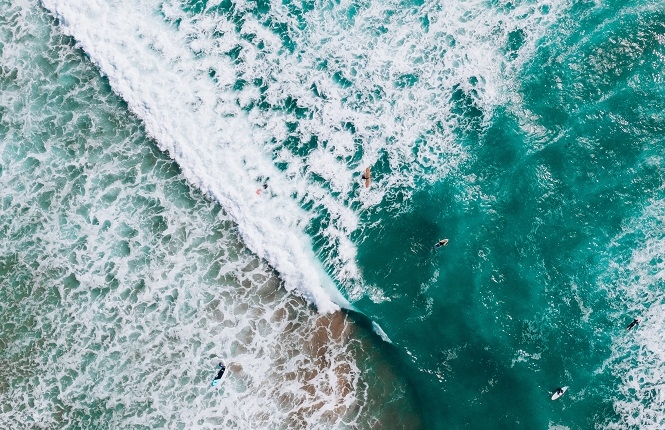
Currents can be of different size, intensity, and speed. They are stronger in the tide; low and with the presence of larger waves. Typically, they are more easily identified when viewed from above, but it is difficult to identify them. It's also very easy to identify from the sand, at beach level, just keep your eyes open and notice the signs.
When we are on more open and more exposed beaches (with long strips of sand), we have a greater incidence of these currents. They form between two shallower places on the beach, that is, between two sandbanks. It is usually the place where two waves in opposite directions meet.
How does this phenomenon work? The waters dissipate with the breaking of the waves and reach the lake. beach, then they make their way back from the sand towards the sea at the point where they encounter the least resistance. These points are the channels where the sand strip is located. deeperwhich is why they sometimes end up leaving the water with a darker color. They also often have a browner color, due to the agitation of the sand caused by the movement at the bottom, through the return of water.
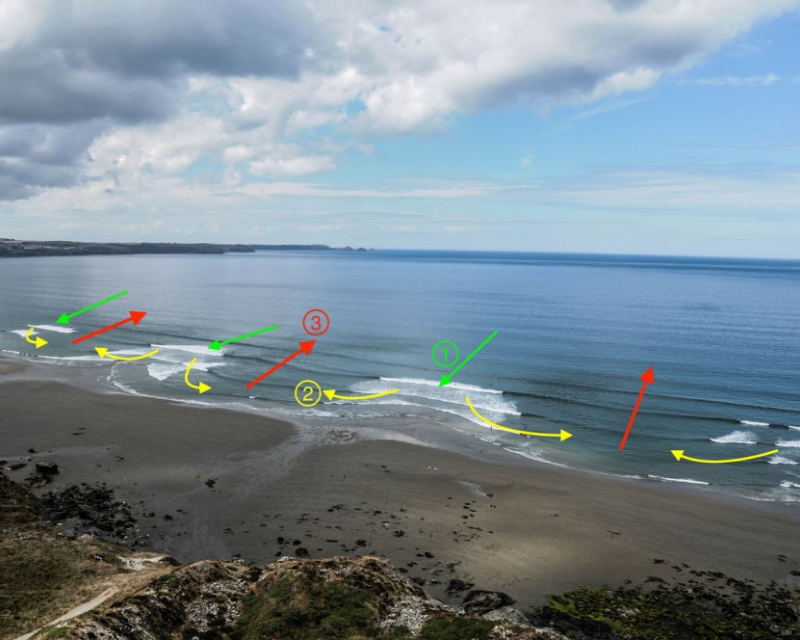 Example of the ditch (red arrow) on sand bottom. The green arrows represent the surf zones.
You You can also observe the place with the lowest incidence of waves - with less white foam - that is, an apparently calmer place compared to the surf zone ;O. The water has a calmer appearance, but is clear. It is possible to see small ripples on the water surface caused by this return movement towards the sea.
When the bottom is of sand, these ditches are said to be fixed, even for the background to change again. Ditches on a sandy bottom can change location especially after a storm surge, which removes and moves a lot of sand from the bottom, changing the conformity and bathymetry of that beach. Now In rock bottoms, these currents are permanent. Another place where they are permanent is in the corners of beaches, as they are always found close to large obstacles such as the stones and rocks that usually outline these corners.
[TAKE THE SURFGURU WAVE FORECASTING COURSE ]
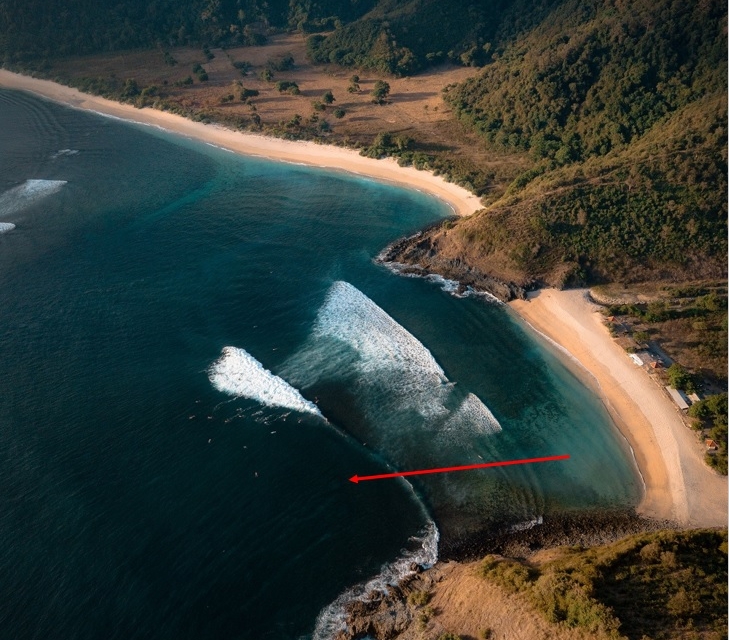
Example of the ditch (red arrow) on a stone background and beach corner. Photo by Nick Wehrli on Pexels.
Now inside the seathe perception of these currents is different. If you is You're trying to stay at your peak and you're not working. If you succeed, you are possibly within a chain. Also stay tuned if you are interested. is there is It's been a long time without catching a wave and it's happening. Looking to the sides and seeing other surfers starting the wave and finishing close to you, or if you are looking at the wave? is You're rowing a lot and you're not comfortable. jumping on the bandwagon. Remember that the waves end at the ditch, so this is the first step. This is another indication that you are needs to reposition itself.
Another indication is; the change in water temperature. The ditch has a beginning (also called a mouth) that is located at the bottom of the ditch. the part that is in the sand of the beach, the middle (also called the neck), which is the middle part of the beach. the channel where water passes from the shallow part of the beach to the deep part and the end (also known as the head of the ditch), which is the part where the water that was returning dissipates. In this part that is beyond the surf line, the water has a colder temperature due to the return of deeper waters.
PairFor us surfers, knowing how to identify a ditch can save a tremendous amount of effort that could otherwise be difficult. be best used during your surf session! É That's it, surfer. Pay attention to the signs and good surfing. Aloha!
-----
What if you If you want to delve a little deeper into wave forecasting, we recommend the Wave Forecasting Course at Surfguru. With it you can surf. You will be able to use prediction to your advantage through basic concepts and practical tips!
The course é completely online, with approximately 4 hours of recorded classes and in it you will be able to learn more. You will learn the entire theory of wave formation: from how they form, how they move, to how they move. their arrival on the beach. He offers you everything, EVERYTHING, so that you can enjoy it. be able to correctly interpret the forecast.
Who has already studied? is PRO subscribers have an exclusive discount through our Advantages Club. If you is not yet available. PRO, try for 30 days free using the CURSO30 coupon. Let's go?
-----
Lidiane Jorão is Graduated in Physical Education, passionate about the world of physical activity and all the its possibilities. "I wasn't always surfing, but I was always sea in some way". He started with body surfing, then came sup and then a brief experience with kite surfing. Nowadays she continues to evolve in shortboard surfing. Increasingly involved in this wonderful sport.
Instagram: @lidiriosurf
Vídeos | Mais Vídeos
-
Festival de Surf e Ciência, cultura oceânica e limpeza de praia em Regência - ES
-
Expression Session #7: Fábio Sandes — longevidade e bem-estar no surf com o método surf resistência
-
Fernando de Noronha: swell refratário e altas ondas no Bode
-
Expression Session #6: Caio Freire fala sobre surf, Setiba, comunidade e o Shaka Surf Park
-
Temporada de surf em Noronha: as melhores ondas de 2026
-
Expression Session #5: Marcelo Trekinho e sua trajetória desde o Surf Adventures até o UARADEI
-
Swell de Norte em Noronha: Cacimba do Padre bombando com a galera do Surfguru
-
SURFISTA ÍTALO-BRASILEIRO DESTACA EVOLUÇÃO EM SESSÃO NOS SUPERTUBOS, EM PENICHE
-
VIDEO: Piscina de ondas em Búzios: conheça o projeto do Brasil Surfe Clube
-
Expression Session #4: Eduardo "Rato" Fernandes revela bastidores do Surf Adventures e da Urca do Minhoto